Choosing a lab-grown diamond for a ring designed from scratch
Choose a lab-grown diamond by looking at the actual stone, its laboratory report and its millimeter measurements alongside the ring you want to make. A high grade or a big carat number cannot tell you whether you love its appearance, whether the proportions suit your hand or whether it works with the setting.
If you want a lab-grown diamond, we can start there. Then I want to know what you are picturing when you imagine the ring on your hand.
Big? Delicate? A long oval? Something low that you aren't constantly aware of? You might want several of those things at once, and that is where the conversation gets interesting because choosing a diamond and designing the ring really need to happen together.
I work with natural and lab-grown diamonds, colored and colorless, as well as unusual colored gemstones. I don't need to talk you into a different category before we can talk about what makes a particular stone right for you.
But I do want us to choose the stone. Not just the listing with the most impressive numbers.
Where should we start when choosing a lab-grown diamond?
Start with the finished ring: the shapes you love, the proportions you want, your budget range and the way you expect to wear it.
You don't need to arrive knowing your ideal measurements. Send the pictures you keep saving and tell me what you like about them. Sometimes it is the diamond, sometimes it is the band around it, sometimes it is the combination and you would not feel the same way about either part on its own.
That distinction matters before we narrow down candidates.
For a custom lab-grown diamond engagement ring, I want the stone selection to support your design. A diamond that looks lovely loose still needs a setting that holds it properly and feels right to wear.
What should I look for on the laboratory report?
Look for the stone's identity, report number, measurements and the quality information that particular laboratory and report service provide.
Don't assume every report uses the same language. IGI's laboratory-grown diamond report guide explains its description, shape, measurements and 4Cs information. For its current D-to-Z laboratory-grown diamond service, GIA uses an overall Premium or Standard quality assessment, rather than the same reporting format you may remember from older lab-diamond reports.
That makes reading the actual document more useful than relying on a retailer's shorthand. Check the report with the issuing laboratory, and ask how the stone being offered is matched to it. A valid report number alone doesn't establish that the diamond in front of you is that diamond.
Then look at what the report can help us decide, and what still needs a conversation. It doesn't know your ring size, how high you want the setting to sit or which outline makes you stop scrolling.
If the grades are good, what is left to compare?
The appearance of the individual diamond still matters, including its outline, proportions and how it looks as it moves.
I would want comparable photographs and video, not one dramatic image of each stone taken in completely different conditions. Is the oval outline the one you like? Do you prefer a wider shape or a longer one? Are you happy with the appearance through movement, rather than only the frame where everything flashes at once?
With fancy shapes, proportions alone don't settle the question of cut quality. IGI explains that its fancy-shape cut assessment combines proportion requirements with visual assessment. Read the actual report rather than assuming a polish or symmetry grade tells you everything about the cut.
You don't have to learn every technical term before you are allowed an opinion. “I like this one more, but I don't know why” is useful feedback. We can look at what you are responding to.
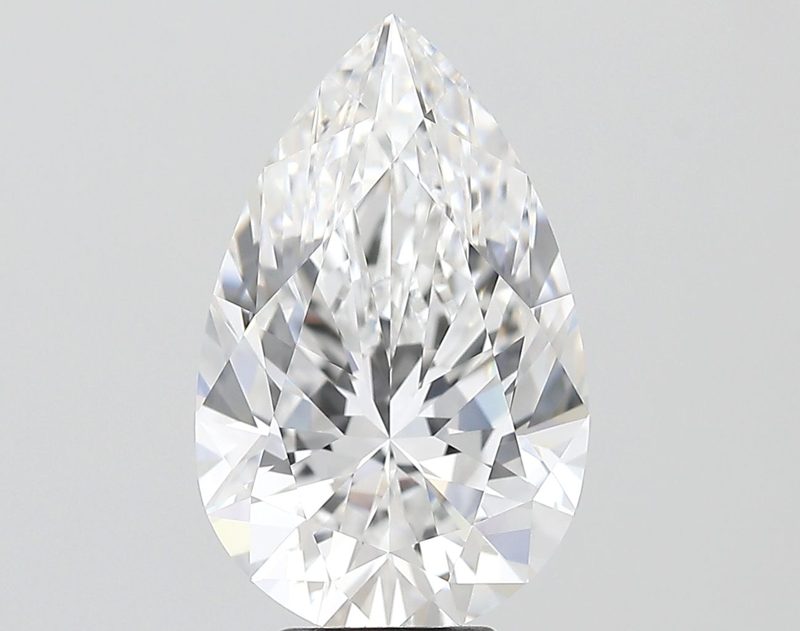
Should I choose the biggest carat weight within my budget?
Only if that stone also gives you the appearance and finished ring you want. Carat is a unit of weight, not a measurement of how large a diamond looks from above.
People forget that carat is a unit of weight. If mentally you want a 3ct diamond, okay, let’s look at 3ct diamonds. I understand that the number can mean something to you.
At the same time, if we try different sizes and a 9mm round looks best on your finger, let’s look for stones around 9mm too. We can keep both things in the conversation, the weight you have in mind and the proportions you actually love on your hand.
That isn’t a conversion from 3ct to 9mm. For a round stone, we are talking about diameter; for an oval or marquise, I want to look at both length and width. The measurements and the weight tell us different things.
I try to balance those measurements with cut and the proportions of the whole ring. A round, oval and marquise of the same weight can look very different, and two stones of almost the same weight can have surprisingly different visible sizes.
In the photograph I shared in our stone-sourcing guide, the smaller-looking stone on the left weighs 2.94ct and the larger-looking stone on the right weighs 2.84ct. The example illustrates weight versus visible size, without making a claim about the stones' natural or laboratory-grown origin.
That is why I don't want the carat filter doing all the choosing for us.
Tell me whether you love the number, the coverage on your finger or both. We can work with that honestly.
How does the setting affect which diamond we choose?
The diamond's length, width and depth affect the setting, so discuss height, band proportions and wedding-band fit before committing to the stone.
Maybe you want a large center stone and a very low ring. Maybe you want a straight wedding band to sit closely alongside it. Those preferences need to be considered together, using the actual dimensions and construction, because a reference photograph doesn't tell us what is happening underneath the diamond.
I also want to know how the ring will fit into your day. If you use your hands constantly or dislike the feeling of a tall ring, that belongs in the brief now.
A wax-model try-on can help you understand the design's size and height before the finished piece is made. It won't show the diamond's sparkle or reproduce the metal's weight, but it gives you something more useful for judging the shape than trying to imagine everything from a screen.
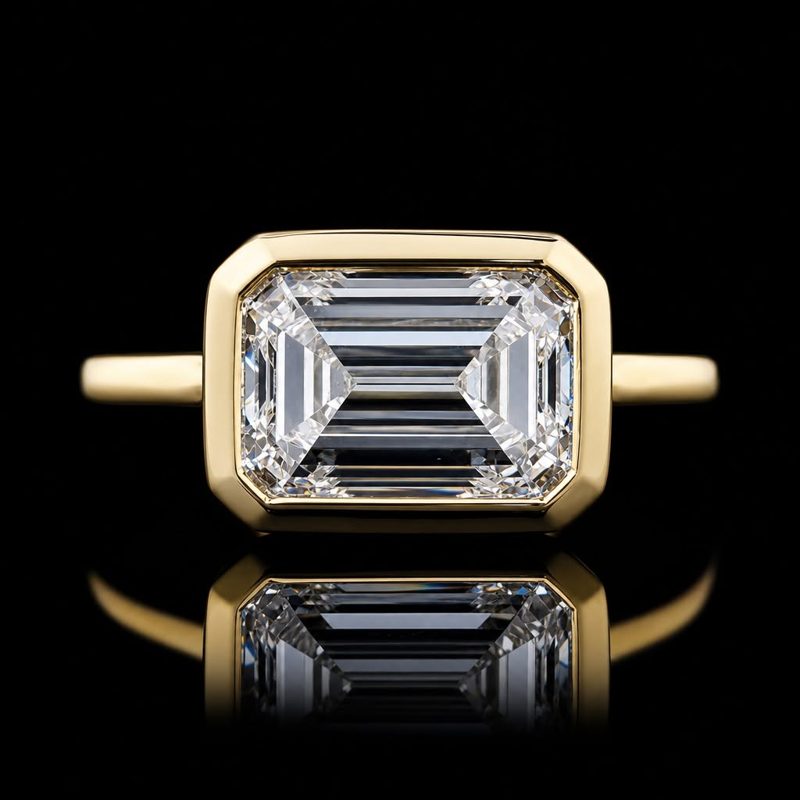
Does choosing a lab-grown diamond mean the ring should be bigger?
No. You can choose lab-grown and still want a modest stone, a substantial setting or a ring where the center diamond is only part of the design.
If your chosen diamond leaves room in the budget, that doesn't create an obligation to increase its size. You might care more about the band, side stones or a personal detail. You might simply prefer to spend less.
We have used individual IGI-reported lab-grown diamonds in three necklaces made as wedding gifts. That commission was about three coordinated pieces for specific people. The point wasn't to chase the largest stone possible.
A ring can be approached with the same attention to the brief. What are we making, who is it for, and which choices actually make it better for that person?
What if I want a colored lab-grown diamond?
Make the color part of the brief from the beginning, rather than choosing a shape and size first and treating the shade as an afterthought.
Finding an amazing rich green in a lab-grown diamond is harder than finding a listing that says green. We've done it, but that doesn't mean the same shade will always be available in whatever shape and dimensions you want.
Our natural versus lab-grown colored diamond guide goes into origin, reports and color treatments. If you have a very specific shade in mind, start with references and tell me which part you are least willing to compromise on.
Color, size, shape and the setting have to come together in an actual stone and an actual ring. That is the work.
What should I send you to get started?
Send a few ring references, your favorite shapes, your budget range and timeline, and anything you already know about how you want the ring to feel on your hand.
If you have a diamond listing or report you are considering, include it. If you are still at “I think I want an oval, but honestly I keep changing my mind,” that is also a perfectly useful place to start.
I want the practical details to make sense, and I still want that moment where you see a stone and know. THE stone. The grades help us understand it. They don't get to have that moment for you.
Send your favorite shapes, ring references, budget range and timeline. Email Chloe.