Natural vs. lab-grown colored diamonds for a custom ring
Natural and lab-grown colored diamonds are both diamonds, but their origin and the origin of their color are separate questions. For a custom ring, I would compare the actual shade, treatment disclosures, documentation, dimensions and total ring budget before deciding which direction feels right for you.
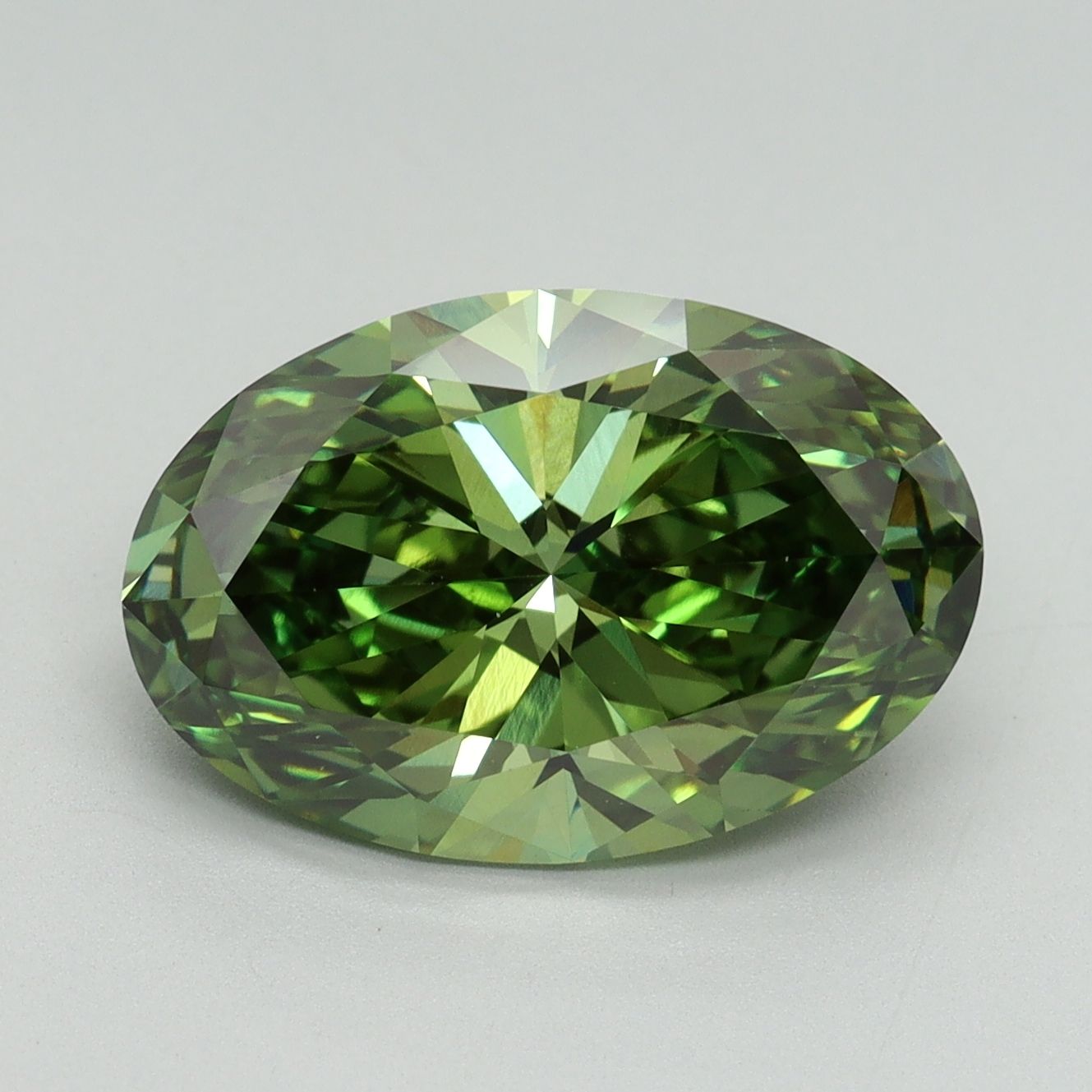
If you came to me wanting a green diamond, my first question would be, “Show me the green.”
Because you might mean a soft, almost silvery green, and I might be picturing something rich and saturated, and we could spend a very long time talking about natural versus lab-grown without ever talking about the thing you actually fell in love with.
I work with both. Natural diamonds, lab-grown diamonds, colored and colorless, and I don't need you to arrive having picked a side. I want to understand what matters to you, then look at real stones that make sense for the ring we are building.
Sometimes origin is a big part of that. Sometimes the exact color is. Sometimes you have a budget and a picture saved on your phone and want to know what is possible.
All perfectly good places to start.
What is the difference between natural and lab-grown colored diamonds?
The basic difference is where the diamond formed. A natural diamond formed in the earth; a lab-grown diamond was created using a technological growth process. A lab-grown diamond is not the same thing as a diamond simulant such as moissanite. GIA explains the distinction between natural and laboratory-grown diamonds.
But “natural diamond” does not automatically mean “natural color.” A natural diamond can have its color changed by treatment. A lab-grown diamond can also undergo treatment after growth. Those are different facts, and I want both made clear.
GIA's guide to diamond treatments explains why color treatment needs to be part of the buying conversation.
| What you are considering | Where the diamond formed | What still needs checking |
|---|---|---|
| Natural diamond with natural color | In the earth | The color-origin finding, color description, condition and other report details |
| Natural diamond with treated color | In the earth | The disclosed treatment, documentation and any specific care requirements |
| Lab-grown colored diamond | A laboratory growth environment | The lab-grown disclosure, reported color and any post-growth treatment information |
I would rather spend a few minutes making that distinction than have you buy something with a different story from the one you thought you were buying.
Should I choose the color or the diamond origin first?
Start with whichever is genuinely non-negotiable for you.
If knowing that a diamond and its color formed naturally is part of what you love, tell me that. It changes the search. If your priority is a particular pink or green and you are open to lab-grown, tell me that too. We can explore that direction without pretending the two categories have the same rarity story.
Then get specific about the color. “Pink” is a starting point. Do you want something soft? Something bright? Is there a peach tone you love, or a brownish tone you don't want? Would a slightly different shade still make you happy if everything else about the stone worked?
Those answers are more useful to me than a list of grades with no picture of what you mean.
This is also where my family's background comes in. We've been in the jewelry business since 1979, with dealer relationships around the world that span a lifetime. I wrote more about those relationships in how we source a colored gemstone for a custom ring. They give us people to talk to and possibilities to explore. They do not make every color, size and shape available on demand.
A closer look at the colors
These photographs show why I want to see the color you mean. A pink oval, a peach-toned oval, yellow and two different blue looks give us much more to talk about than a color word alone. These are visual references, not a matched natural-versus-lab comparison; photographs cannot establish origin, treatment or a laboratory color grade.
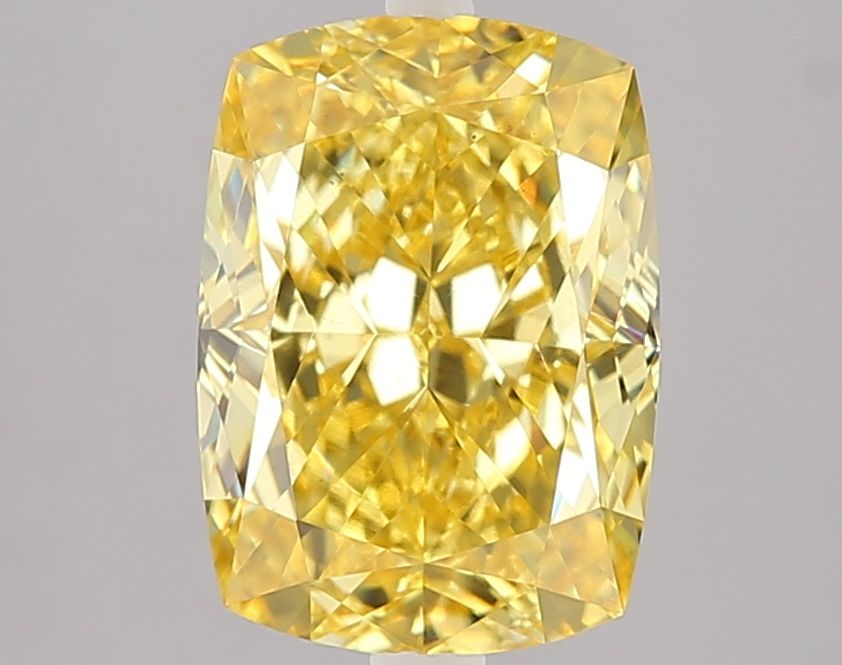
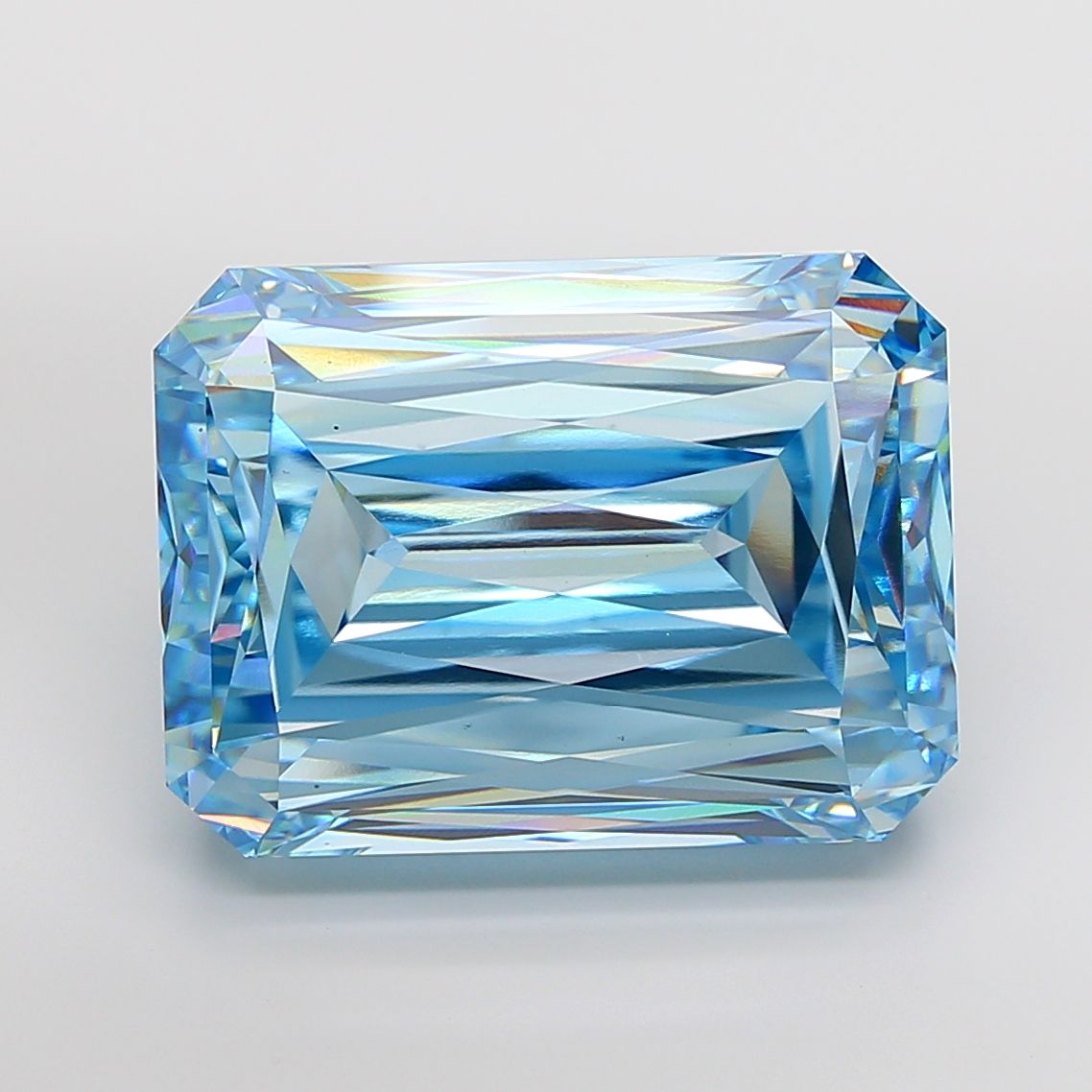
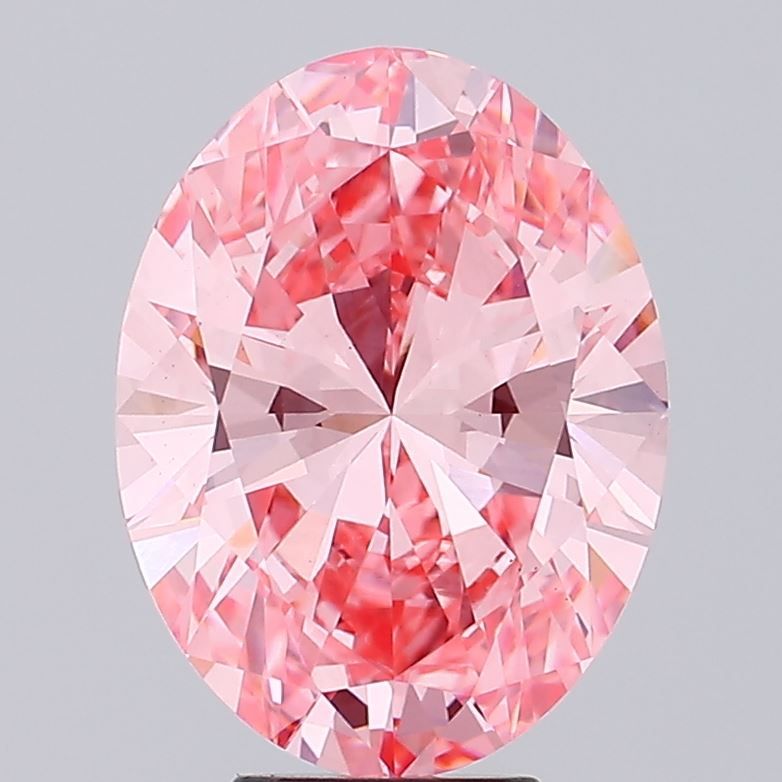
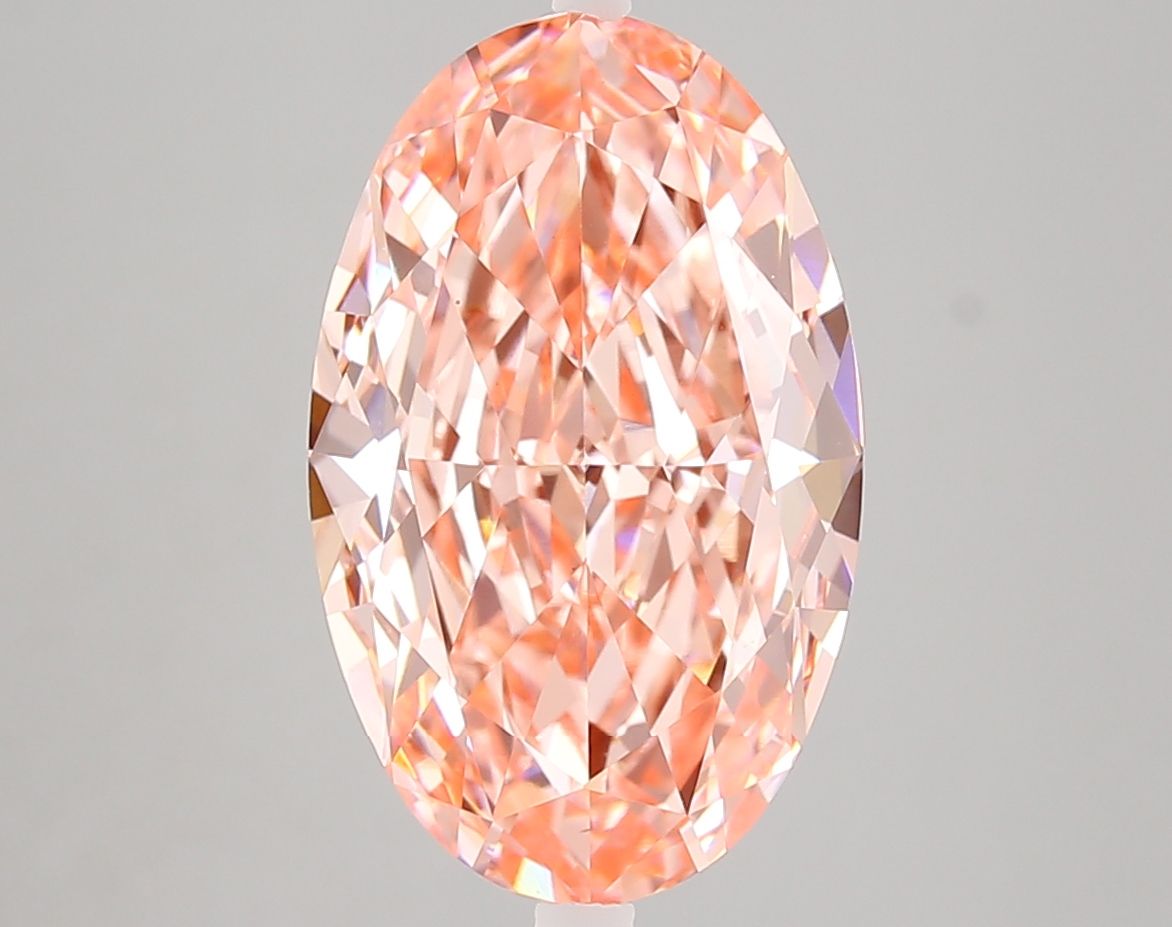
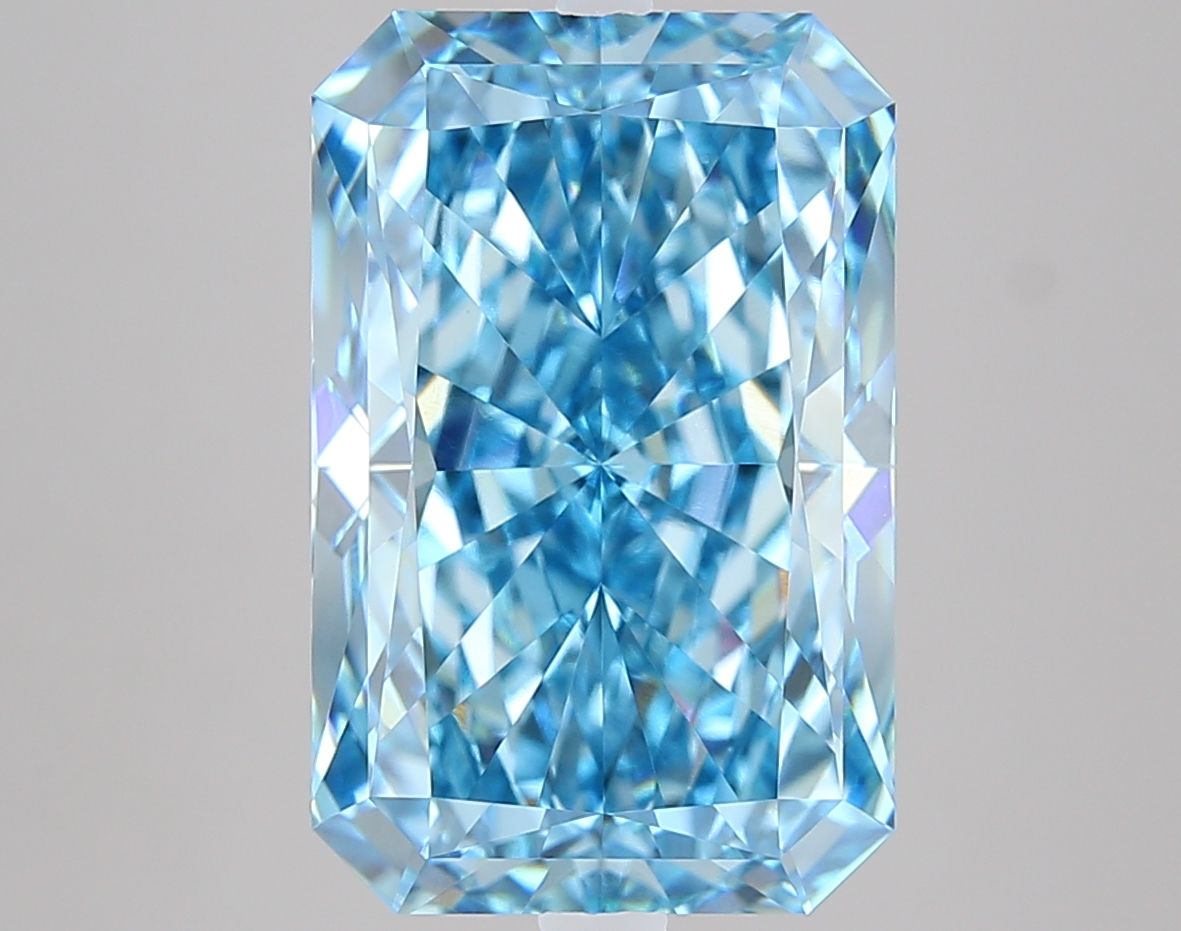
Are green lab-grown diamonds easy to find?
Finding a green lab diamond and finding the particular rich green you have in your head can be two very different searches.
In my sourcing experience, that amazing rich green is harder to find, especially once we also want the right shape, proportions and a stone that works with the rest of the ring. But we've done it.
I like being clear about both parts of that sentence. There is a reason to explore it. There isn't a reason to promise that the exact stone is always available.
If your reference is pale mint, that is a different brief again. Our mint-green custom engagement ring guide looks at green lab diamonds alongside other gemstone possibilities. Here, the question is narrower: if you want a diamond, which actual diamond gives you the color and overall result you want?
What should a colored diamond report tell me?
A useful report helps establish what the diamond is and what the laboratory found about it. Read the scope of the actual report, rather than assuming every document contains the same information.
For natural colored diamonds, GIA offers different services. Its Colored Diamond Grading Report includes a quality assessment and identifies natural versus treated color. Its Identification and Origin Report has a narrower scope focused on identification and color origin. “Color origin” is not automatically the country the diamond came from. GIA describes its colored diamond report options here.
For a lab-grown stone, I want the lab-grown identity clearly disclosed and the available growth and treatment information explained. A retailer's description and a laboratory report serve different purposes; I would not use an attractive product name as a substitute for documentation.
When we compare candidates, these are the questions I want answered:
- Is the diamond natural or lab-grown?
- What does its report actually say about color and treatment?
- What are the measurements, and does the document match the stone being offered?
- Are there condition or care considerations relevant to the setting?
- What remains unknown or outside the report's scope?
The paperwork matters. So does seeing the stone.
How should I compare the color in photos and videos?
Ask for comparable views, ideally with the stones shown together under the same lighting and against the same background.
A beautifully lit close-up is lovely to look at. It is less helpful if one candidate is photographed in soft daylight and the other is under a completely different light, then you are trying to work out whether you prefer the diamonds or the photography.
I would want a face-up view, movement and a sense of the stone in ordinary lighting. Images help us narrow the conversation; a phone screen cannot promise an exact color match in every environment.
Also, don't let a grade do all the choosing for you. GIA explains that color is central to fancy-color diamond evaluation and that even small differences can matter. It also notes that colored diamonds are often cut to bring out color, so assessing them is not simply the same exercise as assessing a colorless round brilliant. GIA's fancy-color buying guide is a useful starting point.
I want you looking at the whole stone. Is the color beautiful to you? Does it feel lively? Is it the shape you want to keep looking at?
Does a higher carat weight mean a bigger-looking ring?
No. Carat is weight, and the dimensions you see from above are a separate part of the decision.
I shared a real comparison in our sourcing guide: the smaller-looking stone on the left weighed 2.94ct, while the larger-looking stone on the right weighed 2.84ct. The photograph is an appearance comparison, not a cut diagnosis, but it shows why I don't want us choosing from a carat number alone.
The same thinking belongs in a colored-diamond search. We should look at millimeter measurements, the shape, the way the stone carries its weight and how those proportions work with your ring size.
You can absolutely have a number in your head. I just want you to see the options before that number rules out a stone you might love more.
How should we compare the budget?
Compare actual documented candidates and the complete ring design, rather than relying on a blanket percentage or a promised “equivalent” stone.
A natural-color diamond and a lab-grown colored diamond can look appealing for different reasons, but matching a color word and carat weight does not make them interchangeable products. Likewise, two natural diamonds can be very different propositions once the color, treatment findings and proportions are considered.
Tell me the budget for the finished ring, not only the center stone. We still have a setting to design, metal to choose and practical details to resolve. I would rather work through those together than get attached to a stone and discover the ring around it no longer fits the brief.
I am not going to make an investment promise to help you choose an engagement ring. The useful question is whether you understand what you are buying and feel good about the whole purchase.
Can the setting change how a colored diamond looks?
The setting is part of the visual result, so I want us considering the diamond and the metal together.
Try to picture more than a loose stone on a white background. Do you want warm yellow gold around it? A white metal? A substantial frame or a more open setting? Those choices can change the overall impression even though they do not change the diamond's laboratory color grade.
The personal part matters too. Our marquise engagement ring upgrade included four hidden stones representing the couple and their two children. It is a different kind of commission, but it shows why the finished ring is about more than its center-stone specification.
With a custom engagement ring, we have room to work through the whole thing.
Where do we start?
Send me the color you keep returning to, the shapes you like, your budget range and your timeline. Tell me whether natural origin is essential, whether you are open to lab-grown, or whether you would like help understanding both.
And if all you have is a screenshot and “I don't know what this is, but I love it,” send that.
I want the information to be clear and the practicalities to make sense. Then I am looking for the same thing you are: that moment where a possibility becomes THE stone.
Talk to me about your colored diamond ring.
Tell me what you love, your budget range and your timeline. Email Chloe.