Diamond Shape Guide
How to choose a marquise diamond beyond the carat weight
Choose a marquise diamond by comparing its outline, length and width, visual symmetry and appearance as it moves, alongside its laboratory documentation. Carat weight tells you how much it weighs. It does not tell you whether you will like its proportions or how it will look on your hand.
By Chloe Alpert ·
Two diamonds can both be marquise and feel completely different. One might be long and narrow, another fuller through the middle, and you can have a very definite preference before you know a single thing about either report.
I want to pay attention to that preference. The numbers are useful, but I don't want us to talk you out of noticing what you actually like.
There is a moment I am looking for when we compare stones, the one where it stops being a list of candidates and becomes THE stone. Getting there takes more than sorting a website by carat weight.
What makes a diamond a marquise?
A marquise has an elongated outline with a pointed end at each side.
Within that outline there is room for quite different proportions. Think about the fullness of the sides, the transition toward the tips and the overall balance. You may like a softer, fuller silhouette or something very long and slender.
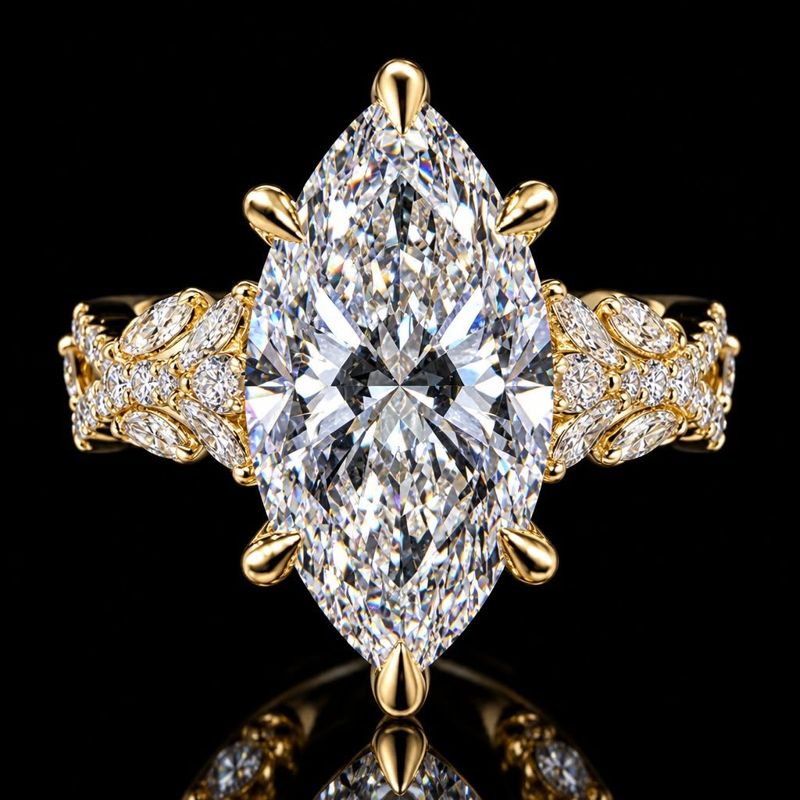
When you send inspiration, I want to know which of those things you are responding to. “I like marquise” is a starting point. A few examples usually tell us much more.
GIA's marquise buying guide discusses how proportions and symmetry affect the shape. It is useful background, but it cannot pick your favorite outline for you.
What is the best length-to-width ratio?
There is no single ratio that guarantees the marquise you will love. Length divided by width gives us a comparison tool.
For example, a hypothetical stone measuring 12mm long and 6mm wide has a ratio of 2.0. That is arithmetic, not a recommendation or a stone currently available from us.
The ratio helps describe how elongated an outline is. It does not contain everything about the curve of the sides, the quality of the cut or the way light moves through the diamond.
I would rather compare two outlines you can see than keep adjusting a search filter until it produces a number someone on the internet called perfect. If you like a fuller marquise, we should know that before dismissing every fuller stone.
How much does carat weight tell me about size?
Carat tells you weight; the millimeter measurements describe dimensions.
If mentally you want a 3ct diamond, okay, we can look for that. At the same time, if a particular footprint is what looks best on your finger, I want to consider stones with that footprint too, because the number on the report is not the thing you see every time you look down at your hand.
A 9mm round and a marquise measuring 9mm long are very different shapes. For a marquise we need both length and width, plus the depth and the eventual setting, before we have a useful sense of the ring.
We also shouldn't assume two stones of the same weight will appear identical in size. In a comparison I shared previously, the 2.94ct stone on the left looked smaller than the 2.84ct stone on the right. That example is about visible proportions, not a marquise specification or a promise that a lower carat weight always means more spread.
I want a balance: the size you enjoy, a stone with an appearance you love, and proportions that work in the finished piece.
What should I look for when the diamond moves?
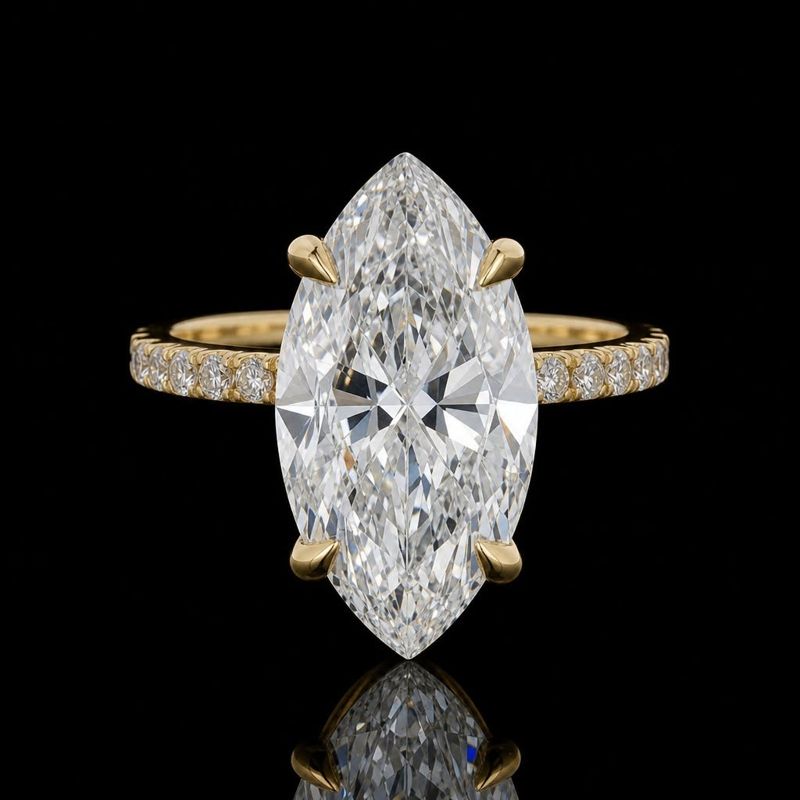
Look at the whole stone through movement, rather than choosing from one especially flattering frame.
Ask for a face-up view and video in comparable conditions when comparing candidates. Notice whether you keep returning to the same stone. Notice what distracts you too. You don't have to know the technical name for something to say it bothers you.
Marquise diamonds can show a bow-tie pattern of contrast across the center. The strength and appearance of that pattern need visual assessment; a photograph or a promise of “no bow tie” is not a substitute for viewing the stone through movement. GIA discusses this in its marquise guide.
I would not want you to choose a diamond you find visually distracting just because the paperwork looks good. Equally, I don't want a term you've read online to stop you enjoying a stone before you have really looked at it.
What should the report help us check?
The report should help establish identity and document the characteristics assessed by the issuing laboratory.
Check that the dimensions, weight and description correspond to the candidate, and verify the report with its issuer. Ask how the stone is matched to that report. Then review any origin and treatment information relevant to it.
Reporting formats differ, so don't assume that a familiar label means the same thing across every service. A report is part of the decision. It cannot tell us how the ring feels on your hand or which outline you prefer.
Should I choose a natural or lab-grown marquise?
Either origin can be considered, depending on your priorities and the actual candidates available.
I work with both. We can talk about custom lab-grown diamond rings if that is your preference, or consider natural diamonds as part of the custom ring process. Color belongs in that conversation too, including whether you want a bright appearance or something warmer.
I wouldn't infer a diamond's origin from a picture or its apparent warmth. We need documentation for that. What I do want from the picture is a starting conversation about taste.
For orientation, height and wedding-band fit, see designing a marquise engagement ring.
When should we think about the setting?
Before the stone decision becomes final, because the stone and setting need to work together.
Tell me if you want an east-west ring, a low profile, a substantial band or a wedding band that sits closely beside it. Those preferences give the selection process direction.
Our 3ct marquise upgrade with four hidden family stones is one example of a finished ring built around more than the center stone's weight. The personal details are part of the reason for making it.
Want help comparing marquise diamonds? Send your favorite outlines, budget and timeline. If you already have candidates, include their reports and videos so we can talk about the actual stones.