Blowing the whistle on fake lab diamonds on eBay: we bought 50, and every one was moissanite.
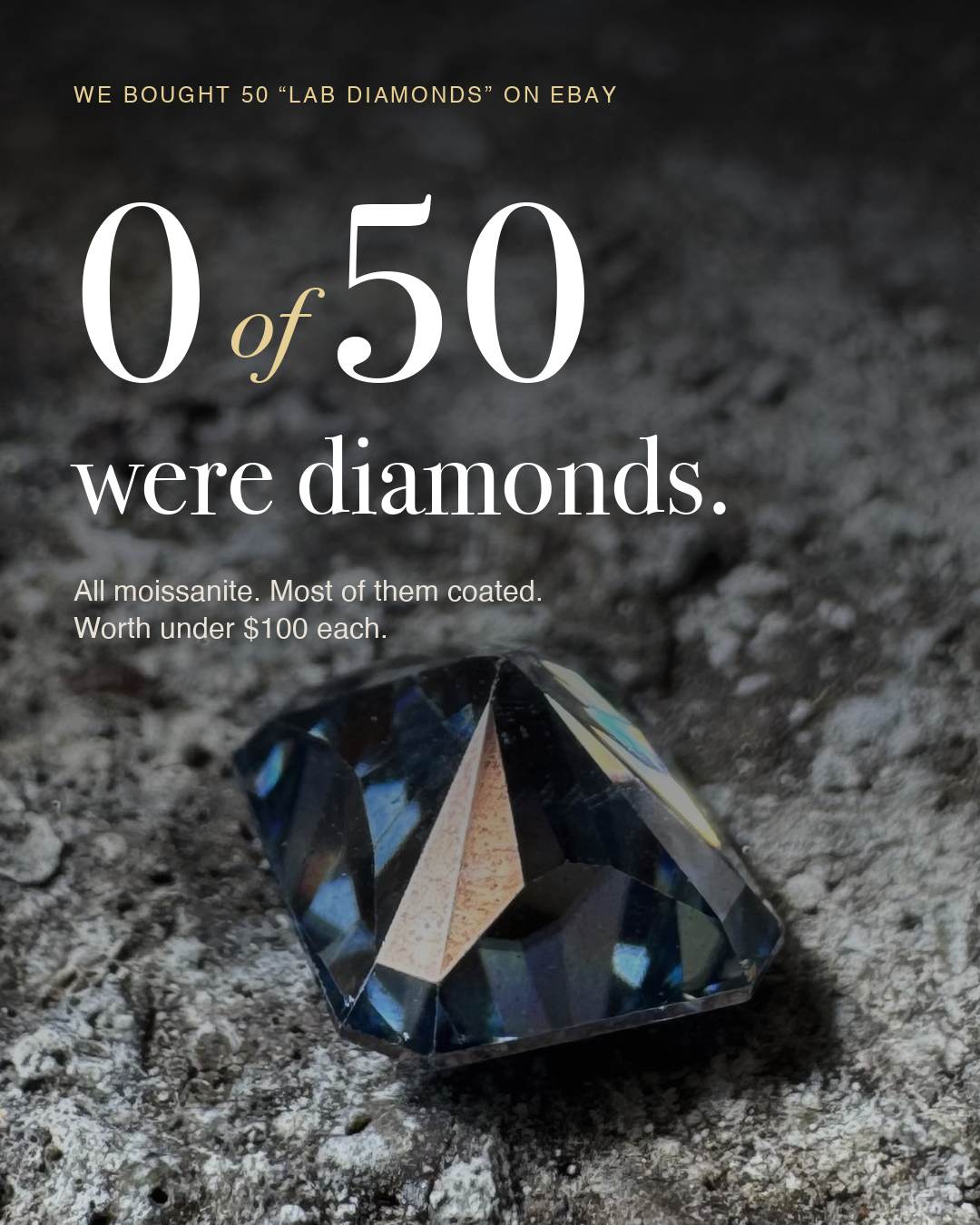
The "lab diamonds" on eBay are, in our testing, not diamonds. We bought more than 50 stones listed as lab grown diamonds from more than 20 different eBay sellers, white and fancy colored. Every single one was moissanite. Most of the colored ones were white moissanite with a colored coating on the pavilion that we polished straight off. They are pretty stones worth under $100 each, being sold as something they are not. If the price is too good to be true, it is. Not usually. Always.
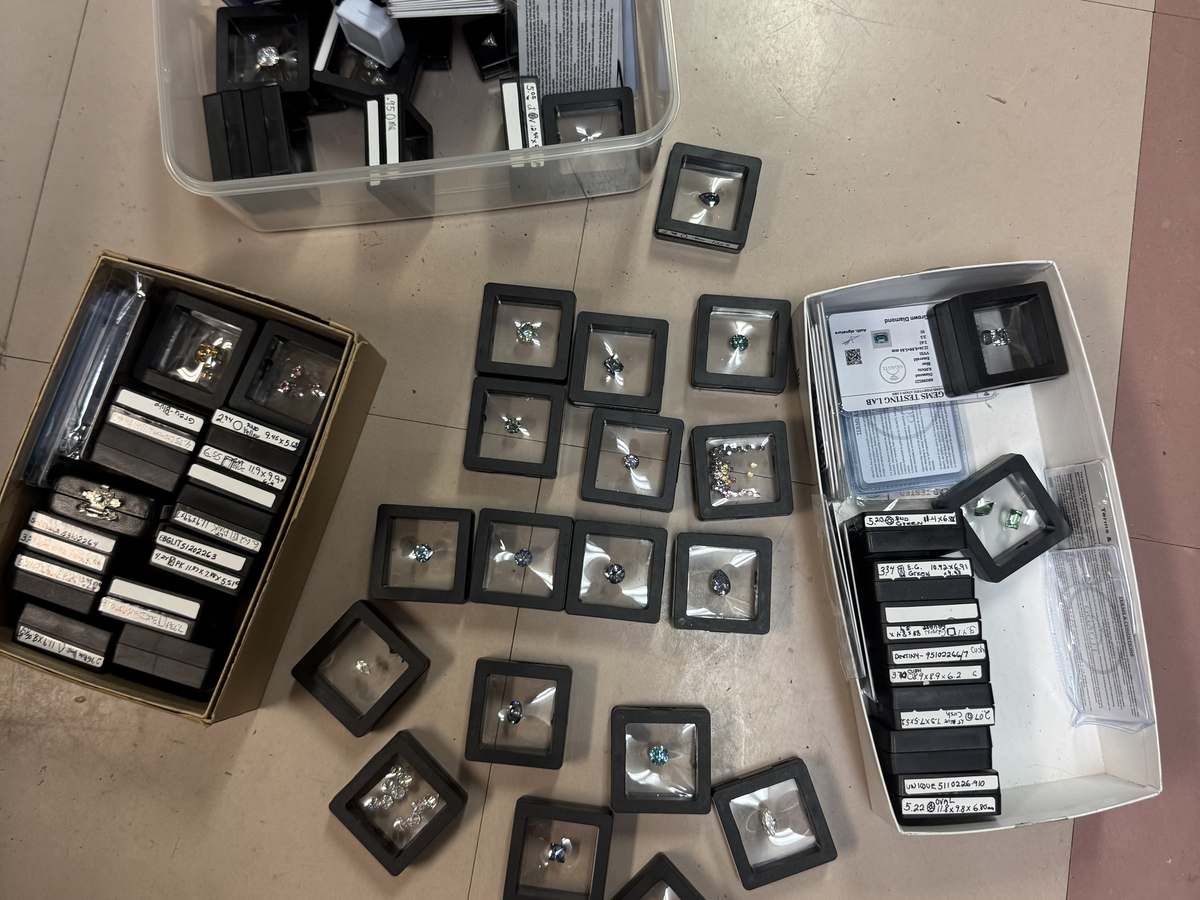
I wanted this to be a story about bargains. I had been watching the eBay listings for months: two-carat "lab grown diamonds" in vivid pink and blue, big white radiants, all for a fraction of what any lab diamond of that size costs at wholesale. So my mother, Sharon, who founded Teaman Jewelry in 1979, and I ran an experiment. We bought over 50 "lab diamonds" from more than 20 different eBay vendors, colored and white, and put every one on the bench. Not one was a diamond. All of them were moissanite, a silicon carbide stone that looks like a diamond from across a room and wholesales for pocket money. This is not a quality problem, like the bottom-of-the-market diamonds on TikTok. This is misrepresentation, and there is a lot of it.
Are the lab diamonds sold on eBay real?
Fifty-plus stones, twenty-plus sellers, zero diamonds. That is the whole finding, and it did not depend on the seller, the color, the shape, or the price. The white stones were moissanite. The blue stones were moissanite. The pinks, the yellows, the "fancy vivid" anything: moissanite.
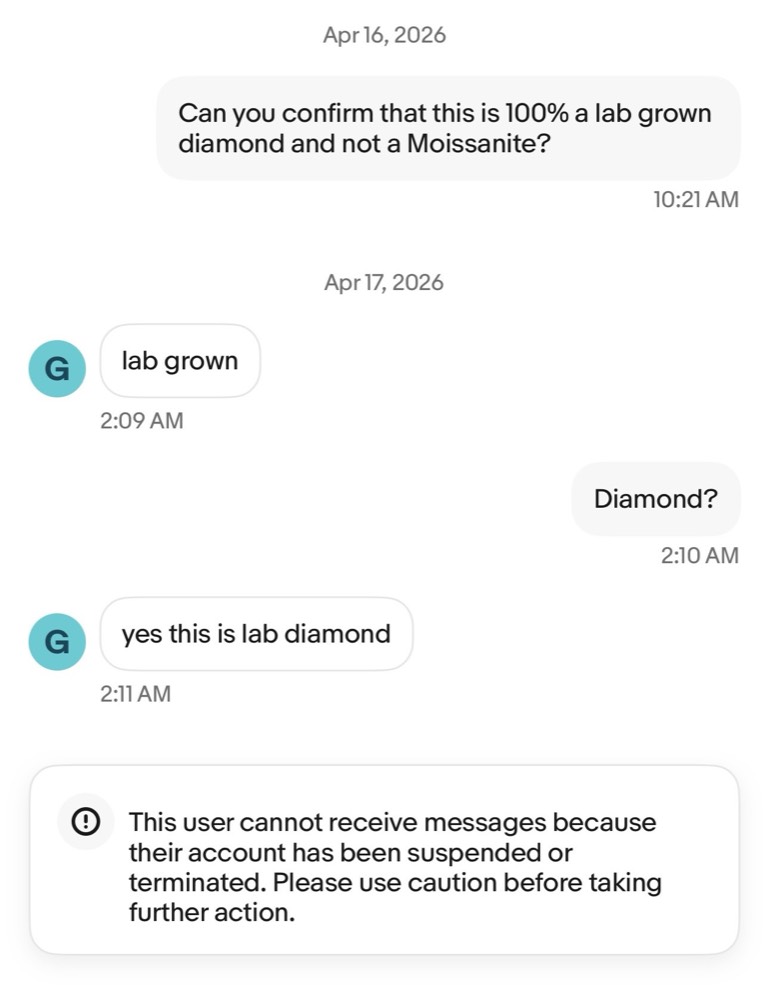
To be clear about what we tested: these were listings that said lab grown diamond, lab created diamond, or CVD diamond in the title. Not "moissanite," not "diamond simulant," not "lab created stone." Selling moissanite is legal and fine. Selling moissanite as diamond is misrepresentation under the FTC Guides for the Jewelry Industry, which require that any diamond imitation be clearly disclosed as such. Every listing we bought from failed that test.
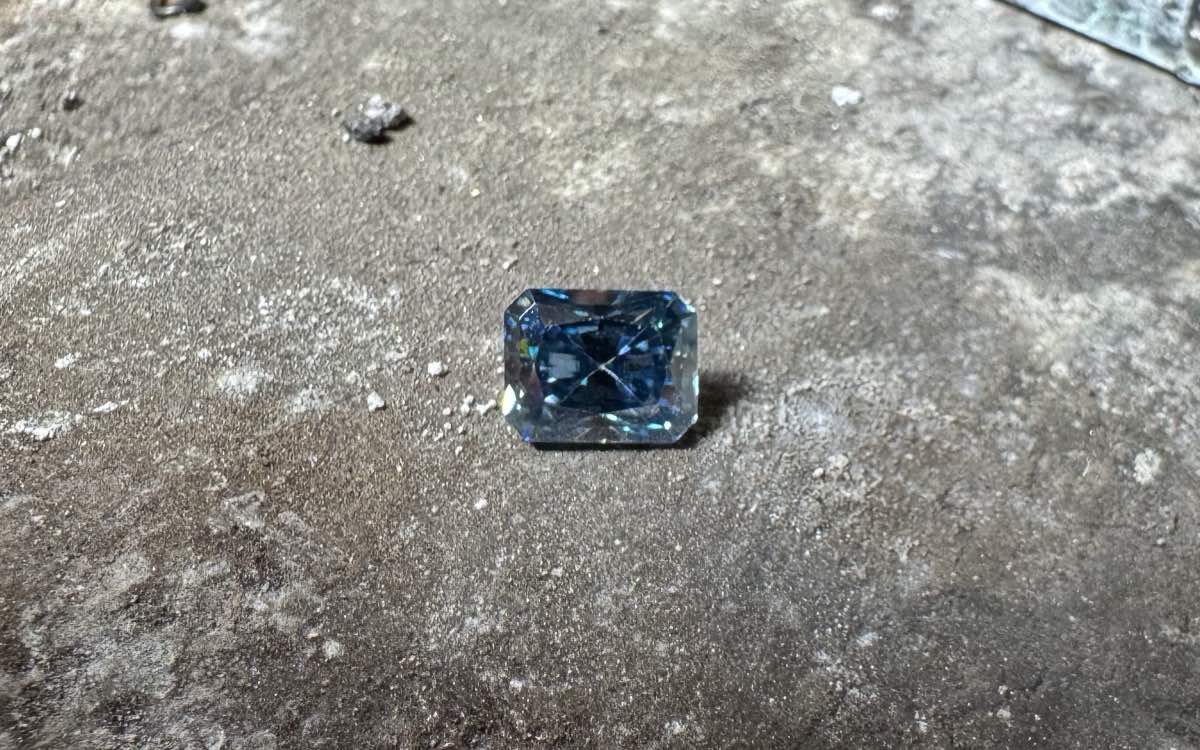
And the stones are, genuinely, beautiful. That is what makes this work. Moissanite has more fire than diamond, it is hard (9.25 on the Mohs scale versus diamond's 10), and a well-cut piece throws rainbows across a room. Nobody opens the package and feels cheated. They feel lucky. They stay feeling lucky until they try to resell it, insure it, set it, or clean it.
How are eBay sellers faking pink and blue lab diamonds?
With a coating. Most of the colored stones we bought were white moissanite with a thin colored film applied to the pavilion, the bottom half of the stone. Light enters through the top, bounces off the coated back facets, and comes out tinted. Face up, the color is gorgeous and completely convincing. Tilt the stone under a lamp and the trick shows: a pinkish, coppery reflection flashing off the pavilion facets that no real colored diamond produces.
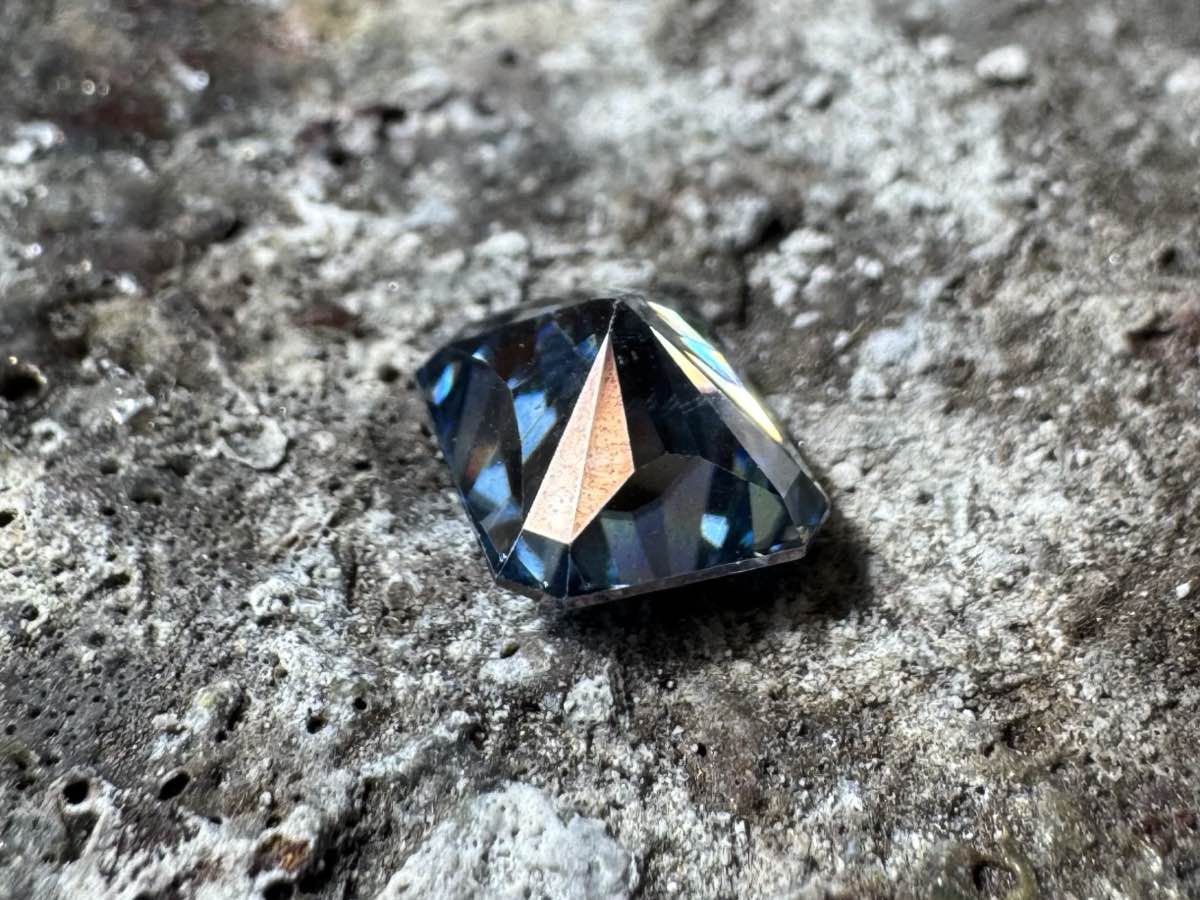
My mother proved it the direct way. She took a "pink lab diamond" to the polishing wheel and worked the pavilion. It came off the wheel white. Once we knew what we were looking at, the coating was easy to find under the microscope on the rest of the batch: a thin film sitting on the pavilion facets, with a hard edge where it stopped. Coating gemstones is not new; GIA has published a 2024 study characterizing coatings on synthetic moissanite, and coated topaz has been sold for decades. What is new is the volume, and the word "diamond" in the listing title.
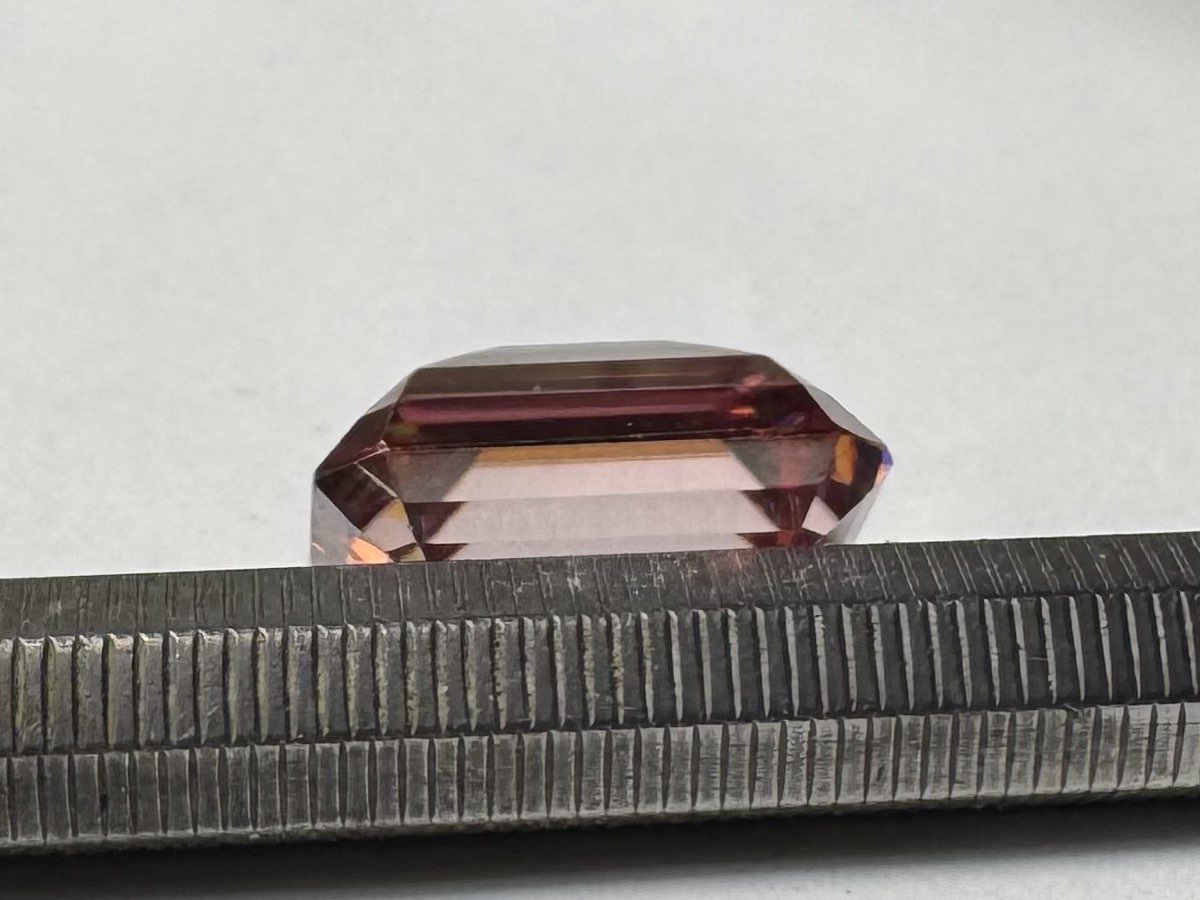
A coating also means the stone has a shelf life. It cannot be repolished, because polishing removes the color. It cannot be cleaned with anything stronger than soap, because solvents like acetone (nail polish remover) attack thin-film coatings. It will scratch at the coating every time the ring bumps a countertop, and the color will wear off unevenly from the bottom up. A real fancy-color lab diamond has its color in the crystal and none of these problems.
Why does a fake eBay lab diamond pass a diamond tester?
Because the cheap pen tester most people own cannot tell moissanite from diamond, and even our bench testers called some of these stones "diamond" at times. Standard pen-style testers measure thermal conductivity. Moissanite conducts heat almost as well as diamond, so it reads "diamond" and beeps. That has been true since synthetic moissanite hit the market in the late 1990s, and it is why the trade uses electrical-conductivity moissanite testers as a second step. On this batch, even that second step was not reliable: the same stone could read moissanite on one pass and diamond on the next, depending on where the probe landed. A tester that says "diamond" is a reason to keep testing, not to stop.
Here is the part that surprised me. Moissanite is doubly refractive: light splits into two rays inside it, which is why you can normally see doubled facet edges when you look through the stone. Diamond is singly refractive and shows no doubling. Under the polariscope, every eBay stone we checked lit up as doubly refractive. But every one had been cut with its optic axis pointed straight through the table, the big flat facet on top. Looking down that axis, a doubly refractive stone behaves like a singly refractive one: no doubling, and it reads like a diamond. Even tilted, the doubling in these stones was extremely hard to see. We are used to spotting moissanite doubling in a second with a 10x loupe. On these it took the microscope, a steep angle through a crown facet, and knowing what we were looking for; on some stones we only trusted it after the polariscope had already told us the answer. Moissanite's higher refractive index (2.65 to 2.69, against diamond's 2.42) is there to measure, but nothing about these stones announces it.
To be fair, cutting moissanite with the optic axis through the table is standard practice; it is how cutters keep the doubling from showing. I will not claim to know anyone's intent. What I can say is that the effect is a stone that passes the one easy check a careful buyer would make, and that the listings called it a diamond anyway.
What are the eBay "lab diamonds" actually worth?
Under $100 a stone, and frequently far less. Loose moissanite in these sizes trades wholesale for tens of dollars. A coated one is worth less than an uncoated one, because the coating is a liability, not a feature. Meanwhile a genuine two-carat fancy blue lab grown diamond, even after the price collapse of the last few years, costs many multiples of what these listings ask. The listing price is the tell. There is no version of the diamond market in which a two-carat vivid blue sells for what these sell for.
| What you were told | What you got |
|---|---|
| Lab grown diamond (carbon) | Moissanite (silicon carbide) |
| Hardness 10 | Hardness 9.25 |
| Color in the crystal | Color in a coating on the pavilion |
| Can be repolished for life | Repolishing removes the color |
| Safe in an ultrasonic, safe with solvents | Nail polish remover can damage the coating |
| Insurable and resellable at diamond values | Worth under $100 as a moissanite |
If you are actually shopping for a colored or white lab diamond, our page on lab created diamond engagement rings covers what a real one costs, what an IGI or GIA report proves, and where the honest bargains are. The honest bargains are real; lab diamond prices have fallen hard. They are just not on eBay.
How do you tell moissanite from a lab diamond at home?
Tilt it, weigh it, and check the paperwork. You do not need a lab for a first pass:
- Tilt the stone under a desk lamp and watch the pavilion. A pinkish, coppery, or oil-slick flash off the back facets means a coating. Diamond does not do that.
- Look through a crown facet, not the table, with a 10x loupe. Doubled facet edges at the back of the stone mean moissanite. On the eBay stones the doubling was faint enough that we needed a microscope, so not seeing it proves nothing; seeing it settles it. GIA's own guidance calls facet doubling the simplest way to separate moissanite from diamond.
- Watch the fire. Moissanite's dispersion (0.104) is more than double diamond's (0.044). If a stone over a carat throws rainbows like a disco ball, be suspicious.
- Weigh it if you can. Moissanite is lighter: specific gravity 3.22 against diamond's 3.52. A stone that measures like a two-carat diamond but weighs like a 1.8 is not a diamond.
- Look up the report number. A real lab diamond of any value comes with an IGI or GIA report you can verify on the lab's website. No verifiable report, no diamond. And beware the reverse trick: GIA has documented moissanite laser-inscribed with a fraudulent GIA number copied from a real diamond's report.
Any of those is enough to send the stone to a jeweler. Any jeweler with a moissanite tester can settle it in ten seconds, and most will do it for free.
What should you do if you already bought a fake lab diamond on eBay?
Get it tested, get it in writing, and file a claim before the window closes. The eBay Money Back Guarantee covers items that do not match the listing, and a moissanite sold as a diamond is the textbook case. You have 30 days from delivery to open an "item not as described" case, so do not sit on it. A one-line note from a jeweler stating the stone is moissanite is usually all the evidence you need.
Then report the listing. eBay's selling practices policy prohibits misrepresenting an item, Several of the sellers we bought from had disappeared by the time our testing was done. Whether eBay closed those accounts or the sellers closed up after a run of sales, we cannot tell from the outside. Either way, new listings keep appearing, and a filed claim is the one record that follows the seller rather than the stone.
One thing from the bench: I have been testing stones since 2009, and I expected the colored ones to be the giveaway and the white ones to be a mix. They were not a mix. Not one white "lab diamond" in the batch was a diamond. It was my mother, who has been at the bench since 1979, whose instinct was to put one on the wheel. And "too good to be true" remains a phrase people say and then ignore.
Every diamond Ring Mint sources comes with an IGI or GIA report you can verify yourself, plus an independent appraisal, at below jewelry store prices because there is no store. Email Chloe, including if you just want to know whether the eBay stone in your drawer is real. It probably is not, but I would rather tell you than have you find out at a pawn counter.